Evaluating the Visualization Icon - Infographic Vector Collection
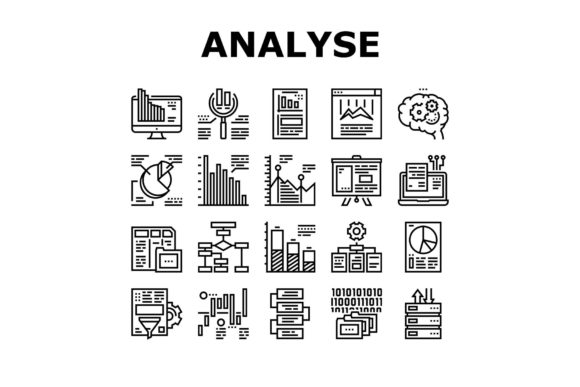
In the realm of digital design and data presentation, the ability to communicate complex information quickly is paramount. The Visualization Icon - Infographic collection represents a specific category of design assets aimed at streamlining this communication process. For designers, marketers, and business analysts evaluating their resource libraries, understanding the practical utility and technical specifications of such vector packs is essential before integration into a workflow. This evaluation focuses on the functional aspects, technical inclusions, and strategic fit of this 100-file vector set for printable and digital projects.
Defining the Asset Class
The Visualization Icon - Infographic is not merely a set of decorative symbols; it is a functional toolkit designed for information architecture. Unlike standard icon sets that may focus solely on objects or actions, visualization icons are structured to represent relationships, processes, hierarchies, and data points. When evaluating this specific collection, it is important to recognize that these assets serve as visual shorthand for abstract concepts. They bridge the gap between raw data and audience comprehension, functioning as modular building blocks for infographics, presentations, reports, and educational materials.
The collection comprises 100 fully resizable vector files. In professional design contexts, "vector" implies mathematical precision rather than pixel-based rendering. This distinction is critical for users who require assets that maintain integrity across various media, from small mobile screens to large-format printed banners. The inclusion of both EPS10 source files and 300DPI JPEG previews suggests a workflow-oriented approach, allowing users to assess content visually before committing to the more resource-intensive vector editing process.
Technical Specifications and Workflow Integration
When selecting design assets, technical compatibility often dictates utility. This collection provides two distinct file formats that serve different stages of the design evaluation and execution process:
- EPS10 Vector Files: Encapsulated PostScript version 10 is a widely supported industry standard. It ensures backward compatibility with older versions of Adobe Illustrator and CorelDRAW while maintaining full editability. Users can modify anchor points, adjust stroke weights, and recolor elements without quality loss. This format is essential for print production and high-resolution branding.
- JPEG Preview at 300DPI: While vectors are superior for final output, they are difficult to browse natively in operating system file explorers. The inclusion of 300DPI JPEGs serves a dual purpose: rapid visual auditing and immediate use in low-stakes mockups. At 300DPI, these previews are sufficient for draft printing or internal review documents, reducing the need to open vector software during the selection phase.
- Resizability: The "fully resizable" nature of these 100 files eliminates the resolution constraints associated with raster graphics. For projects requiring consistent visual language across disparate touchpoints—such as a business card and a trade show booth—this scalability ensures brand consistency without the need to source multiple asset variations.
Strategic Benefits for Information Design
The primary value proposition of the Visualization Icon - Infographic set lies in efficiency and cognitive load reduction. Creating custom visualization metaphors from scratch is time-consuming and requires specialized illustration skills. By utilizing a pre-designed library of 100 cohesive icons, teams can significantly reduce production time for data-heavy deliverables.
Furthermore, visual consistency is a key metric in professional design evaluation. Sourcing individual icons from different creators often results in mismatched stroke widths, corner radii, and stylistic tones. A unified collection ensures that a flowchart, a statistical breakdown, and a process timeline appear as parts of a singular, coherent narrative. This cohesion is particularly valuable in corporate reporting and academic publishing, where aesthetic uniformity supports perceived credibility.
For printable projects specifically, the vector format guarantees crisp edges. Text and line work in infographics often suffer when converted to raster formats at insufficient resolutions. Maintaining the native EPS10 format through to the print RIP (Raster Image Processor) stage prevents artifacts that can undermine the professionalism of physical collateral.
Tradeoffs and Practical Considerations
Despite the advantages, objective evaluation requires acknowledging limitations. A fixed set of 100 icons, while comprehensive, cannot cover every conceivable data scenario. Users must assess whether the available metaphors align with their specific domain. For example, a healthcare analytics report may find generic business visualization icons insufficient for clinical workflows. Before acquisition, it is prudent to audit the JPEG previews against current and anticipated project requirements to ensure adequate coverage.
Editability also introduces a complexity tradeoff. While EPS10 files are customizable, modifying complex compound paths requires intermediate-to-advanced vector software proficiency. Teams lacking dedicated designers may find themselves limited to using the icons "as-is," which restricts color palette adaptation and stylistic integration. Additionally, while EPS is a robust standard, some modern web-focused workflows prefer SVG. Users intending to deploy these icons primarily on websites may need to convert EPS files to SVG, introducing an extra step in the pipeline.
Licensing is another critical consideration. Vector packs typically come with specific usage terms regarding redistribution, modification, and commercial application. Evaluators must verify that the license permits the intended end-use, particularly if the icons will be embedded in products for resale or used in trademarked logos, which is frequently restricted in stock vector agreements.
Situational Fit Assessment
Determining whether the Visualization Icon - Infographic collection is the right solution depends on specific project parameters. This asset pack demonstrates strong alignment with the following scenarios:
- High-Volume Content Production: Agencies or departments producing weekly reports, social media carousels, or blog content benefit most from the time savings of a pre-made library.
- Cross-Media Campaigns: Projects spanning both digital and print mediums require the versatility of vector assets that do not degrade at any scale.
- Standardized Corporate Templates: Organizations building internal PowerPoint or InDesign templates need neutral, adaptable icons that can be recolored to match evolving brand guidelines.
- Educational Material Development: Textbooks and e-learning courses require clear, non-distracting visuals to explain systemic concepts, making structured visualization icons ideal.
When to Consider Alternatives
Conversely, there are situations where this specific type of asset may not be optimal. If a project demands highly bespoke, illustrative storytelling where icons function as unique art pieces rather than systemic symbols, custom illustration is superior. Stock vectors, by definition, prioritize universality over specificity.
Additionally, for purely digital interfaces (UI/UX), dedicated UI icon libraries or font-based icon systems may offer better performance and accessibility features than generalist infographic vectors. Web-native formats like SVG with built-in semantic tagging are often preferable for interactive applications. Finally, if the budget is constrained and the need is sporadic, free open-source icon repositories may suffice, provided the user accepts potential inconsistencies in style and quality.
Making the Final Decision
Ultimately, the decision to integrate the Visualization Icon - Infographic collection should be based on a cost-benefit analysis of time versus customization. The 100-file count offers substantial breadth, and the EPS10/JPEG combination addresses both production and preview needs effectively. For professionals seeking to elevate the clarity of their printable and digital communications without investing in custom illustration hours, this vector set presents a pragmatic solution. However, success depends on verifying stylistic alignment with existing brand assets and ensuring the team possesses the technical capability to leverage vector editability fully. By weighing these factors against specific project goals, stakeholders can determine if this resource bridges the gap between their data and their audience effectively.